| |
| Tuesday, 06 October 2026 |
| 'Faking It - A desire to Deceive' - The Allure of imitation Jewels and Gems, from 1500 |
| SUSAN RUMFITT |
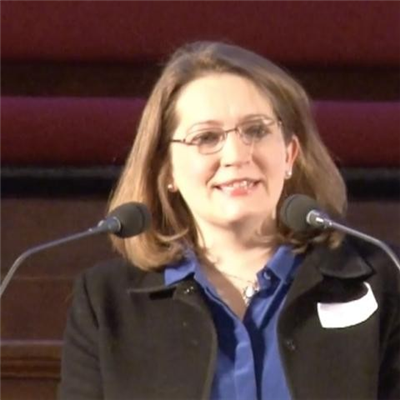 |
In today’s society we are used to wearing costume jewellery and buying stones that have been enhanced in some way to meet consumer demand. But how did all this begin and when, if at all, did it become an acceptable practise? From counterfeit balas rubies found in the Cheapside Hoard to the foiling of precious gemstones and from the introduction of elegant paste in the C18th to the production of the cultured pearl by Mikimoto (referred to at the time as ‘fake pearls’ by natural pearl dealers), this lecture will take you on an exciting journey of the intriguing behaviour of gemstone dealers and jewellers across Europe since 1500 in their quest to deceive! This lecture can be easily extended to a study day and include a handling session of natural and fake gemstones, both set in jewellery and as loose stones. Biography: Independent jewellery advisor, auction consultant and lecturer. Studied for postgraduate degree at Glasgow University. International jewellery specialist at Phillips Auctioneers from 1996 and then Head of Department 1999-2002. Has lectured extensively for ladies luncheon clubs, antiques and collectors groups and is a specialist on the BBC's Antiques Roadshow. |
|
| Tuesday, 03 November 2026 |
| Joseph Wright of Derby - Casting a Light |
| ROSALIND WHYTE |
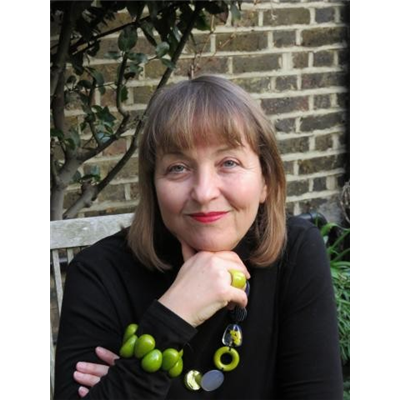 |
Joseph Wright of Derby's work is notable for its exploration of light, including his paintings of candle-lit subjects and his series of views of the eruption of Vesuvius. His paintings capture a period of industrialisation, scientific experimentation and discovery that had a massive impact on the history of England. This lecture explores some of his preoccupations as an artist and as a key figure in the period known as the Age of Enlightenment. Biography: BA and MA from Goldsmith’s College, and an MA (distinction) from Birkbeck College. Experienced guide at Tate Britain, Tate Modern, the Royal Academy and Greenwich. Lectures at Tate, to independent art societies and on cruises. |
|
| Tuesday, 01 December 2026 |
| Christmas with Giles, Grandma and the Family |
| BARRY VENNING |
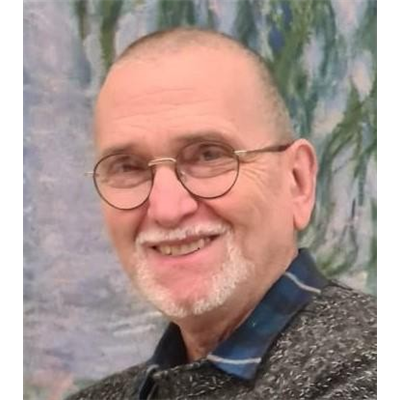 |
For a great many members of The Arts Society, the cartoonist Carl Giles was as much a part of the festive season as the Christmas tree, crackers and the Queen's Speech. So popular were the Giles annuals as Christmas presents that they helped to make him Britain's best loved, most successful and wealthiest cartoonist. The talk looks at Giles's life and work with a particular emphasis on his seasonal cartoons, particularly those featuring Grandma and the Giles family. They include some of his funniest cartoons but, as the art historian William Feaver pointed out, they also demonstrate that he had few equals when it came to representing Britain in Winter. Biography: Barry Venning is an art historian whose interests and teaching range from the art of late medieval Europe to global contemporary art. He has published books, articles and exhibition catalogue essays on Turner, Constable and European landscape painting, but also has an ongoing research interest in postcolonial art and British visual satire. He works as a consultant and associate lecturer for the Open University. His media work includes two BBC TV documentaries, radio appearances for BBC local radio and abc Australia, and a DVD on Turner for the Tate. |
|
| Tuesday, 02 February 2027 |
| Time Machines: Clocks in Art and Literature from c.1300 to Now |
| CHRISTINA FARADAY |
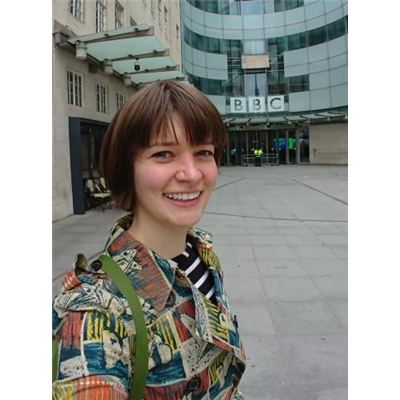 |
Few people nowadays give more than a second thought to their clocks: practical, sometimes beautiful, devices that form the background noise of our daily lives. But from their introduction in the thirteenth century onwards, clocks have held a variety of philosophical and social meanings. This talk explores the visual and literary uses of the clock, the varied meanings it could hold throughout the ages: as an ominous symbol of oncoming death, but also as a metaphor for the soul, for capitalism, and for the good use of time. We will consider medieval manuscripts and frescoes, poetry by Dante and Jean Froissart, still life and genre paintings, satires by Jonathan Swift, Lawrence Sterne, and Hogarth. We will consider nineteenth-century ideas about power and the working day, in portraits of emperors and seamstresses and novels by Dickens. Finally, we will consider the breaking down of temporal certainties in the twentieth century, with Dali, Chagall, Harold Lloyd, Felix Gonzalez-Torres and Christian Marclay. Biography: Dr Christina Faraday FSA FRHistS is a historian of art and ideas, specialising in Tudor and Stuart Britain and the wider 16th and 17th-century world. She is an Affiliated Lecturer in History of Art at the University of Cambridge, a Trustee of the Walpole Society for British art history, and a BBC New Generation Thinker, appearing regularly on BBC Radio 3 and in other popular media. She is the host of British Art Matters podcast, and from 2020-2025 she was a Research Fellow in History of Art at Gonville and Caius College, Cambridge. She is an experienced lecturer, teaching for the History of Art Department at the University of Cambridge, The Wallace Collection, the National Gallery, London, and for Professional and Continuing Education at Cambridge, where she is Co-Director of the MSt in History of Art and Visual Culture. Her first book, Tudor Liveliness: Vivid Art in Post-Reformation England, was published in 2023 by the Paul Mellon Centre and Yale University Press. Her latest book, The Story of Tudor Art, was published by Head of Zeus/Bloomsbury in September 2025 and was named a Times and Sunday Times Book of the Year. |
|
| Tuesday, 02 March 2027 |
| Michael-Jean Cazabon: An Anglo-French Watercolour Painter in Nineteenth-Century Trinidad |
| TIMOTHY WILCOX |
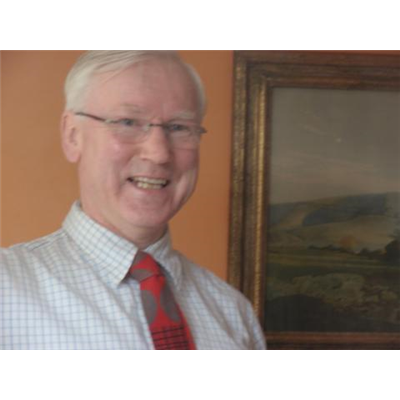 |
A hero in his own country as one of the first locally-born artists, Cazabon (1813- 1888) enjoyed brief, but enormous success for his paintings and prints of the lush scenery of the most southerly island of the Caribbean. A schoolboy in England, then a student in the art studios of Paris in the turbulent 1840s, Cazabon’s career encapsulates many of the contradictory tendencies of European and colonial life in the period surrounding the abolition of slavery. He used his art to overcome prejudice depicting both tropical jungle and cultivated plantations as subjects worthy of notice not only among his own social circles in Trinidad but also in the Paris Salon. Biography: Timothy Wilcox is a writer, lecturer and exhibition curator with special interests in British art, in landscape and in watercolour painting. He was a museum curator in the British Museum Department of Prints and Drawings following positions at the V&A, in Liverpool and Hove. As a freelance curator and lecturer since 1997, he has organised exhibitions on Laura Knight, Hilda Carline, John Sell Cotman and John Constable, at venues including Tate, The Lowry, the Wordsworth Trust and Dulwich Picture Gallery. He contributes regularly to the educational programmes at the Ashmolean Museum in Oxford and lectures at museums and galleries in Britain, Europe and the USA. |
|
| Tuesday, 06 April 2027 |
| MEASURING UP TO THE OLD MASTERS - ÉLISABETH LOUISE VIGÉE LE BRUN AND ANGELICA KAUFFMAN |
| FRANNY MOYLE |
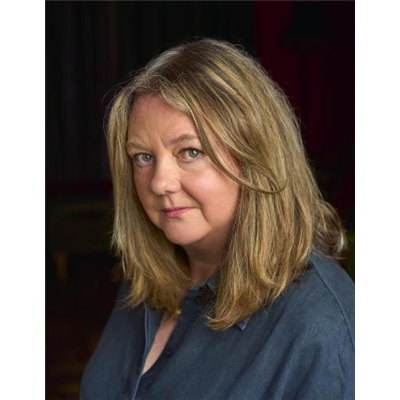 |
In this 45 minute illustrated talk, Franny Moyle reveals how C18th painters Vigée Le Brun and Kauffman invite comparison with Old masters - as well as their male contemporaries - as part of a shared agenda to establish that female talent could match that of men. In an era when the differences of the sexes and their comparative abilities was much debated, women tended to be downgraded as painters, their efforts often diminished and dismissed without proper consideration. In this lecture Moyle shows how the two most successful female painters of their era fought back against ingrained prejudice and deployed - quite independently of one another - a tactic of inviting comparison with Old Masters as a means of endorsing their talent. They also respectively engaged in a pictorial dialogue with their most successful male contemporaries as a means of reinforcing their claim to a seat in the cultural pantheon. Such sparing with the most successful male painters of the day reveals not only their respective confidence in their abilities, but interrogation of their work compared to their peers, suggests such confidence was far from misplaced. Franny Moyle Biography: Television producer turned author, lecturer and curator, Franny has been called “one of the most gifted living writers of artistic biography”. In 2009, Desperate Romantics, her serial biography of the Pre-Raphaelite Brotherhood, was dramatized for BBC2. She subsequently delivered acclaimed biographies of J M W Turner and Hans Holbein the Younger. Her Biography of Turner was described as 'compelling' by The Economist, 'immaculate' by The Times, and ' exemplary' and 'enthralling' by The Sunday Times. Meanwhile, The King's Painter - her account of the life and times of Holbein the Younger - was a Radio 4 Book of the Week in 2021. In 2022 Between the Sheets, her revelatory exhibition of Turner’s erotica, drew national attention. Her account of eighteenth-century painters Angelica Kauffman and Élisabeth Louise Vigée Le Brun is published in 2025. Franny has appeared in her capacity as an art historian on TV and is a regular contributor to radio. She is a trustee of Turner’s House in Twickenham, and a Fellow of the Royal Literary Fund. She lives between Bristol, London and Nice, France. |
|
| Tuesday, 04 May 2027 |
| BEETHOVEN: DEAF, SUICIDAL AND WITH DETERIORATING PHYSICAL HEALTH - HOW DID HE MANAGE SUCH MAGNIFICENT WORKS -This is a Bring Friends Free evening |
| ALAN SILMAN |
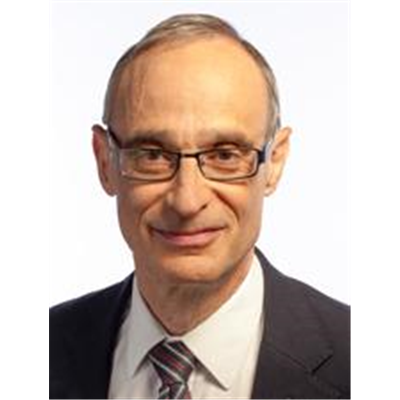 |
Beethoven’s deafness is well known but the psychological impact of this was devastating and also was far from his only problem. Less well known, is the parallel decline in his physical health and failure of many of his organs – the causes I discuss. From an unparalleled quantity of documented material, this lecture will describe in his own words the impact of all his challenges and on his phenomenal outputs. The talk is also richly illustrated with extracts of recordings of his works. I conceive of this talk like a medical "Desert Island Disc' as in - apologies to Lauren Laverne - "So Ludwig, tell us about your next symphony and what was going on health wise". But this is a serious story. As you listen to the short clips and at the same time hear about his declining health, this lecture will be an emotional roller coaster of a life's journey. Clearly dying, and in the most appalling physical distress, he was able to produce works such as the 9th Symphony, ironically based on the Schiller’s ‘Ode to Joy’ – a contradiction that defies credulity. In a final twist the lecture will show that laboratory analysis in the past 5 years of sampled of Beethoven’s hair have helped unravel the cause of his health problems! Biography: In brief Professor Silman has had a career studying the long term effects of disabling disorders. The series of lectures offered to the Society is based on his research on a number of famous people in the arts, of the impact of their medical problems on their achievements. He has focused recently on engaging with lay audiences across a range of platforms aiming to inform, educate and at the same time to engage enotionally with the challenges and sorrows of may of his target subjects Currently Alan Silman is a Professor of Medicine at Oxford University and Senior Research Fellow at Green Templeton College Oxford. Prior to this for 8 years he was Medical Director of the charity Arthritis Research UK (ARUK - now called Versus Arthritis). He is an epidemiologist with a particular interest in diseases of bones, muscles and joints. He has authored over 700 research publications and a number of textbooks. He is amongst the top 100 published scientists across all disciplines in UK universities. He has been an advisor on several government committees including chairing the Appeals Panel for NICE, which sits when there is an appeal if NICE had rejected the use of a drug for the NHS. He has also appeared before a number of UK Parliamentary Select Committees. In his role at ARUK he was responsible, not only for the charity’s research portfolio, but to be ‘the voice’ to both the general public as well as all broadcast and print media on matters related to arthritis. He has received substantial media training in that role. In recent years his focus has been on explaining complexities of science to the informed lay public, best exemplified by his blog during the Covid-19 pandemic which reached 100 countries at its peak He is passionate about the arts and has researched intensively the medical history of well-known individuals. From these researches, he has developed a series of lectures addressing how the lives and outputs, of such individuals were affected by their health. These talks have been given widely to a number of audiences across the UK to U3A, Probus and other community and professional groups. In his spare time, he is a lover of theatre and an amateur drama enthusiast, and he directed his first play in 2024! |
|
| Tuesday, 01 June 2027 |
| THE BARBICAN ESTATE: THE PHOENIX OF THE BLITZ |
| MARK CONNELLY |
 |
Following devastating bombing in the Second World War, the City of London began planning for reconstruction. Among the schemes proposed was one to regenerate the 35 acres razed around Aldersgate Street. Drawing upon the precedent set by their Golden Lane Estate, the innovative architectural practice of Chamberlin, Powell and Bon produced designs for the Barbican Estate and Arts Centre. A stunning example of modern British architectural and town planning, its mixture of low- and high-rise blocks linked by walkways created a discrete village on the north-eastern fringe of the City. However, the bold modernism of the Barbican also paid reverent attention to the past with the church of St. Giles Cripplegate and the sections of the ancient city wall exposed by bombing integral to the development. This talk explores the fascinating evolution of the Barbican project, its long construction process, and the way its amazing aesthetics continue to divide opinion to this day. Spoiler alert: this talk aims to turn you into a lover of the Barbican Estate! Biography: I have always been obsessed with history. My Dad, a London cabbie, drove me around the streets of the capital from the youngest age showing me how every building and stone of London bears witness to the past. My passion for history led me to undergraduate and postgraduate degrees and then a career in University teaching and research. From 2008 to 2024 I was Professor of Modern British History at the University of Kent, and during the First World War centenary I was director of the Arts and Humanities Research Council-funded project, Gateways to the First World War, a centre designed to encourage public engagement with the centenary. This saw me engage with a wide range of organisations and groups and work in collaboration with the Department of Digital, Culture, Media and Sport. As someone committed to the idea of ensuring that all learning is accessible and engaging, and that the excitement of encountering the past can be felt by all, I have much experience of talking to history and heritage groups. My specialism is the cultural history of late nineteenth century and twentieth century Britain with a focus on the architectural and horticultural work of the Imperial (now Commonwealth) War Graves Commission. This specialism means I am a regular speaker at Western Front Association branches (examples of my talks can be seen on the association's YouTube channel), and in 2023 I was presented with an award by the association in recognition of my outstanding services as a speaker and organiser of events. |
|
| Tuesday, 06 July 2027 |
| SPECIAL FOR 2027 - GREAT BRITAIN AND THE HANOVERIAN DYNASTY: A LECTURE MARKING THE DEATH OF KING GEORGE I IN 1727 AND THE ACCESSION TO THE THRONE OF KING GEORGE II |
| BARBARA ASKEW |
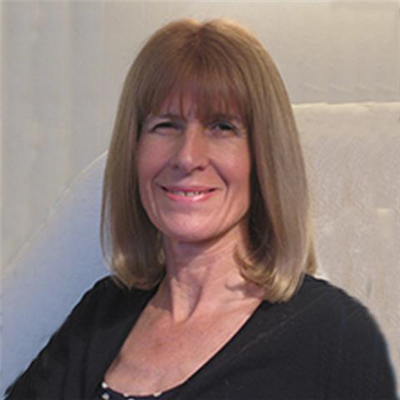 |
2027 marks the 300th Anniversary of the death of King George I and the Accession to the Throne of his son, King George II. This Lecture explains how the ruler of Hanover, a small German state, came to be crowned King of Great Britain and examines the union between the two states which lasted until 1837. Comparisons are made between the way of life and the royal residences in the two states and the cultural exchange which led to a flowering of arts, music and horticulture in Great Britain. An account is given of what the Hanoverian kings did for Great Britain, George IV’s spectacular visit as King of Hanover and what happened to Hanover when the personal union came to an end. Biography: Barbara grew up in Eton with Windsor Castle as part of her daily view. She is the acknowledged expert on Royalty, the Royal Collection and Windsor Castle among Blue Badge guides and has acted as the liaison between tourist guides and Windsor Castle for over 30 years. She is the only Blue Badge guide to have been invited to three Royal Weddings at Windsor Castle.
Barbara has run 11 training courses on Windsor Castle and the surrounding area and she leads the elite team who guide the tours of Eton College. As well as Windsor Castle she specialises in guiding museums, art galleries and gardens. |
|